
CALL US TODAY
770-591-5271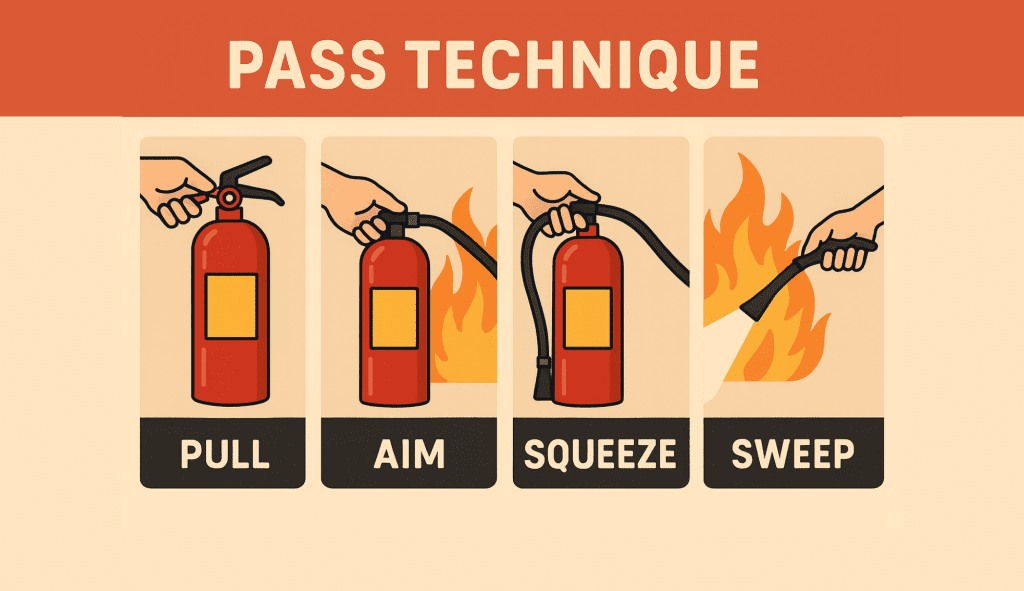
When a fire emergency strikes, knowing how to respond quickly and correctly can mean the difference between a minor incident and a catastrophic loss. But what does PASS stand for in fire safety? This acronym represents the four basic steps for proper fire extinguisher usage: Pull, Aim, Squeeze, and Sweep. Understanding and practicing the PASS technique is your first line of protection when facing small fires in your commercial building or workplace.
Portable fire extinguishers are designed to tackle small fires before they become uncontrollable, but only if used correctly. The PASS fire extinguisher method provides an easy-to-remember framework that works under pressure. According to the National Fire Protection Association, proper training in fire extinguisher use significantly reduces property damage and saves valuable time during emergency situations.
The reality is that most people never use a fire extinguisher until they face a real fire emergency. Without proper training and knowledge of the PASS strategy, panic can set in, leading to common mistakes that render the extinguishing agent ineffective or put people in danger.

The first step in the PASS acronym involves removing the safety pin located at the top of the extinguisher. This pin, secured by a tamper seal, prevents accidental discharge. Hold the extinguisher upright and pull the pin with a firm, deliberate motion. Some extinguishers may require breaking the tamper seal first, which indicates the device hasn't been previously used or tampered with.
Once the safety pin is removed, aim the nozzle of the extinguisher at the fire's base; not at the flames themselves. This is one of the most common mistakes people make during fire emergencies. Directing the extinguishing agent at the base targets the fuel source, which is what's actually burning. Aiming at the flames only disperses them temporarily without eliminating what's feeding the fire.
Position yourself at a safe distance, typically 6 to 8 feet from the fire. This distance allows the extinguishing agent to reach the fire effectively while keeping you away from heat and heavy smoke.
With a firm grip, squeeze the handle or lever to discharge the extinguishing agent. Apply steady, continuous pressure. The extinguisher will only work while you're actively squeezing, releasing pressure stops the flow immediately. Keep your stance stable and be prepared for the extinguisher's recoil when you activate it.
As you discharge the extinguisher, sweep the nozzle from side to side across the base of the fire. Use slow, deliberate movements to ensure the extinguishing agent covers the entire burning area. Continue this sweeping motion until the fire is completely extinguished. Watch carefully for re-ignition, as some fires may flare up again even after appearing to be out.
The PASS technique is just one component of comprehensive fire safety protocols. Proper fire extinguisher usage also requires understanding:
Different Types of Fire Extinguishers:
Before Using Any Fire Extinguisher:
While the PASS fire extinguisher method is essential knowledge, it should complement other fire safety measures in your facility. Regular fire drills, smoke alarms, sprinkler systems, ensuring your fire extinguisher is charged, and accessible fire extinguishers placed in easy access locations throughout your building create multiple layers of protection.
The RACE acronym works alongside PASS in emergency situations: Rescue anyone in immediate danger, Alarm by activating the fire alarm, Confine the fire by closing doors, and Evacuate following your predetermined escape route.
Regular training sessions that include practical training with fire extinguishers in real-life scenarios help build muscle memory. Studies show that hands-on practice dramatically improves response times and effectiveness during actual fire emergencies. Regular maintenance of your fire extinguishers ensures they'll work when needed, and understanding different scenarios helps staff make informed decisions about when to fight a fire versus when to evacuate immediately.
The best way to protect your business and employees is through preparation. Understanding the PASS technique, knowing which type of extinguisher to use for different types of fires, and conducting regular training all contribute to a safer workplace. Remember that fire extinguishers are the next step after prevention fails; they're your last chance to control a fire before calling emergency services and evacuating.
Protect Your Atlanta Business with Professional Fire Safety Solutions
At Cliffs Fire, we provide comprehensive fire protection services throughout the Atlanta area, including fire extinguisher installation, inspection, and hands-on training for your team. Don't wait for an emergency to discover your staff doesn't know proper fire extinguisher usage. Contact us today to schedule a fire safety assessment and training session that could save lives and protect your property. Call us now to ensure your business is prepared for any fire emergency.


 ADDRESS


 Lume Sales & Marketing