CALL US TODAY
770-591-5271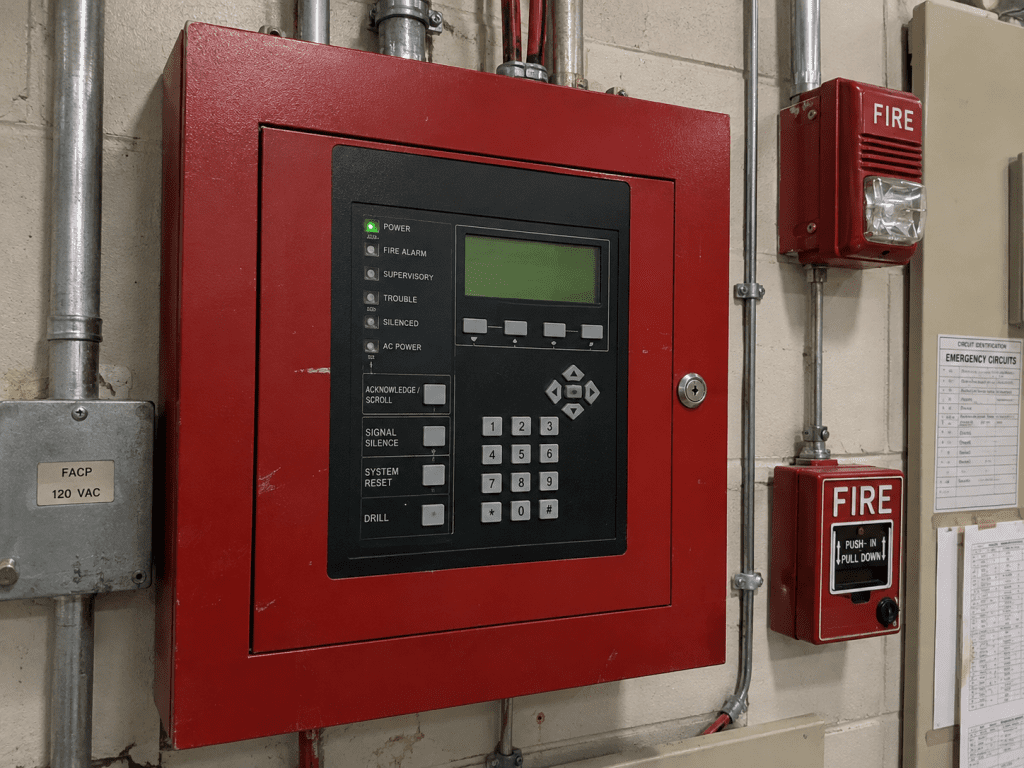
What is a fire alarm panel, and why does every inspector head straight for it? The fire alarm panel, called a fire alarm control unit in NFPA 72, is the box that runs your building's commercial fire alarm system. Every smoke detector, pull station, and sprinkler flow switch reports to it, and it decides when to sound the horns and strobes and when to send a signal to a monitoring company. For property managers and business owners around Atlanta, knowing how the panel works makes it much easier to respond when one of its lights comes on.
The panel has three main jobs. It receives signals from initiating devices, such as smoke and heat detectors, manual pull stations, and sprinkler waterflow switches. It activates notification appliances like horns, speakers, and strobes so occupants know to leave. And in most commercial buildings, it passes alarm information to an off-site supervising station that can contact the fire department.
The panel continuously monitors its own wiring, devices, and power, and it reports problems before they turn into a missed alarm. That self-monitoring is the reason a panel can show a warning on a quiet afternoon when nothing is burning.
Speed matters too. NFPA 72 calls for an alarm signal to occur within 10 seconds after an initiating device activates.
Most panels use a red light for alarms and yellow or amber lights for supervisory and trouble conditions, along with a text display that names the zone or device involved. Each signal means something different.
An alarm signal points to a possible fire. It triggers the building's notification appliances and, on a monitored system, goes to the supervising station.
A supervisory signal means the panel is reporting on another system or piece of equipment it watches. A common example is a sprinkler control valve. If a valve is partially closed, the tamper switch on that valve sends a supervisory signal so someone can open it again before a fire happens.
A trouble signal means something is wrong with the fire alarm system itself, such as a ground fault, a cut wire, or a failing battery. Silencing the buzzer doesn't fix the condition, and the underlying cause still needs to be found. If the problem takes the whole system out of service, the building may need a fire watch until it's repaired. A trouble signal can also come from a single device, which is one reason a smoke detector keeps beeping on some systems.
NFPA 72 sets a priority order. Alarm signals take precedence over pre-alarm signals, pre-alarm over supervisory, and supervisory over trouble.
A fire alarm panel runs on building power, but it can't depend on it. NFPA 72 requires a secondary power supply, typically sealed batteries inside the panel cabinet, that can run a protected premises system for at least 24 hours in normal standby and then operate the notification appliances for five minutes. Voice evacuation systems have a longer alarm requirement.
The 2022 edition of NFPA 72 also requires rechargeable batteries used for secondary power to be listed or component-recognized by a nationally recognized testing laboratory, effective January 1, 2024. Georgia doesn't always adopt the newest NFPA edition right away, so the edition enforced on a specific building can differ.
Batteries lose capacity with age, which is why they're tested during routine inspections. A weak battery is one of the conditions that will put the panel into trouble.
Conventional panels divide the building into zones. When a detector trips, the panel shows which zone is in alarm, but not which device. Responders still have to search that zone.
Addressable panels assign each device its own identity, so the display can name the exact detector or pull station that activated. The differences between addressable and conventional fire alarms affect how quickly a problem can be located, how the system expands, and what it costs to install.
Model codes require sprinkler control valves and waterflow to be supervised by a listed fire alarm control unit. In a building with fire sprinkler systems, the panel is what reports water flowing through the pipes or a valve being closed. Depending on the design, it may also monitor HVAC duct detectors, release door holders, and supervise automatic fire suppression systems.
Because so many systems feed into the panel, a change to any of them can affect it. Adding a tenant space, moving walls, or connecting a new suppression system can mean reprogramming the panel and updating its documentation.
Georgia's Safety Fire Commissioner adopts NFPA standards, including NFPA 72, as part of the state minimum fire safety standards, and those rules apply statewide to every building except one- and two-family dwellings. Local fire marshals enforce them. In Marietta, the Fire Marshal's Office is the permitting authority for fire protection systems, and fire alarm work is permitted separately from the main building permit. DeKalb County requires fire alarm plans to be submitted by a Georgia-licensed low-voltage contractor.
When a panel is replaced, expanded, or reprogrammed, the local fire marshal's office may require plans and a new acceptance test. Checking with the authority having jurisdiction before the work starts avoids delays at final inspection.
Cliffs Fire is based in Atlanta and handles commercial fire alarm service in Marietta, Kennesaw, Smyrna, Roswell, Alpharetta, Holly Springs, and Athens. A scheduled fire alarm inspection checks the panel, its batteries, and the devices connected to it, and it's a good time to clear any lingering trouble signals. Our work is strictly commercial, and it also covers fire sprinklers, fire extinguishers, kitchen suppression, and exit lighting.
If your panel is showing a trouble or supervisory light, or you don't know when it was last tested, contact our team to schedule service.


 ADDRESS


 Lume Sales & Marketing