
CALL US TODAY
770-591-5271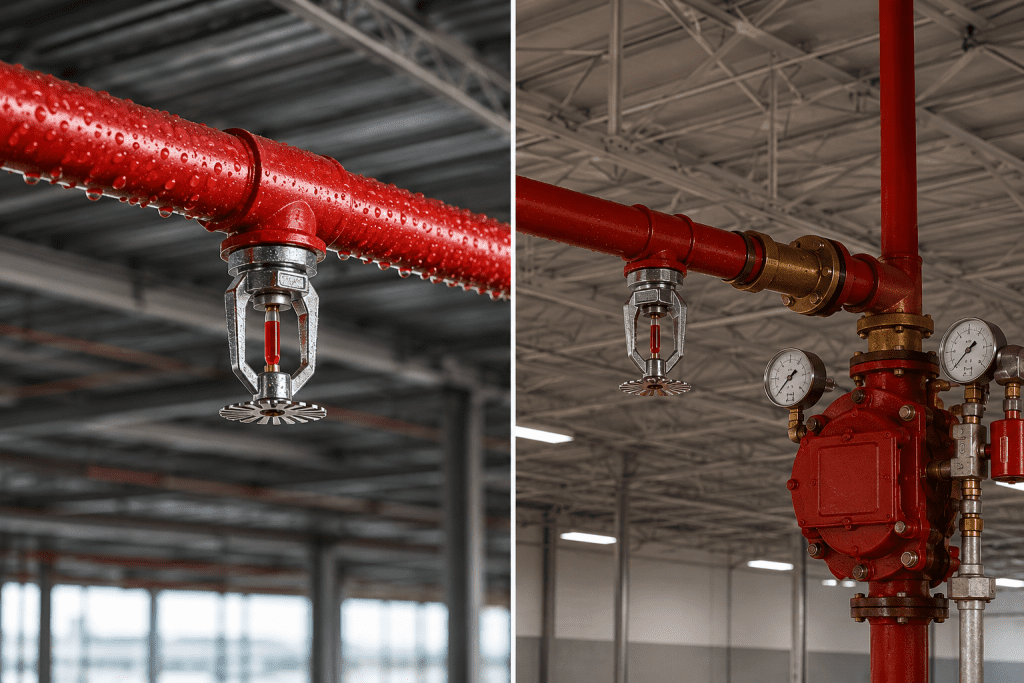
Wet vs dry sprinkler system comparisons often come down to one simple question: which system is best for your building? In most cases, wet pipe sprinkler systems are the preferred choice for heated commercial buildings because they provide immediate water discharge and require less maintenance. Dry pipe sprinkler systems are the better option for spaces that may be exposed to freezing temperatures, such as parking garages, loading docks, and unheated storage areas. For property owners and facility managers throughout Metro Atlanta, understanding the differences between these systems can help ensure reliable fire protection, code compliance, and long-term performance.
Fire sprinkler systems are one of the most effective methods of controlling fires before they spread throughout a building. Whether you own an office complex, warehouse, retail center, healthcare facility, or industrial property in Metro Atlanta, selecting the right sprinkler system is an important investment in both life safety and property protection.
Fire sprinkler systems are designed to automatically suppress fires when heat activates a sprinkler head. Contrary to popular belief, sprinkler systems do not release water from every head simultaneously. Only the sprinkler heads exposed to sufficient heat will activate, directing water where it is needed most.
Both wet pipe and dry pipe systems rely on a network of pipes connected to a water supply. The primary difference lies in what is inside the pipes before activation occurs.
In a wet pipe system, water remains in the pipes at all times, ready for immediate discharge. In a dry pipe system, the pipes contain pressurized air or nitrogen, and water is held behind a specialized valve until the system activates.
Learn more about how fire sprinklers work here: Fire Sprinkler Systems Basics
The distinction between wet and dry systems may seem straightforward, but it has a significant impact on system performance, installation requirements, and long-term maintenance.
A wet pipe sprinkler system stores water throughout the piping network continuously. Once a sprinkler head activates, water immediately flows onto the fire. This design makes wet systems highly reliable and extremely effective at controlling fires in their earliest stages.
Dry pipe sprinkler systems operate differently. The pipes contain compressed air or nitrogen, which prevents water from entering the system until activation occurs. When a sprinkler head opens, air pressure is released, allowing the dry pipe valve to open and water to enter the piping network.
This additional step creates a slight delay in water delivery, but it also prevents pipes from freezing in cold environments.
Wet pipe systems are the most widely installed sprinkler systems in commercial buildings across Metro Atlanta because of their simplicity and dependability.
Since water is already present within the pipes, the response time is virtually immediate when a sprinkler activates. This rapid discharge helps reduce fire growth and limits property damage.
Another reason wet systems are popular is their lower installation cost. Fewer mechanical components are required, making the system easier to design, install, inspect, and maintain.
For office buildings, schools, medical facilities, retail centers, apartment communities, and other climate-controlled spaces, wet systems often provide the most practical solution.
Although Metro Atlanta does not experience prolonged freezing conditions like northern states, many commercial properties still contain areas vulnerable to cold temperatures.
Parking decks, exterior loading docks, refrigerated facilities, outdoor storage structures, and certain warehouse environments may require additional protection against freezing.
Dry pipe systems eliminate the risk of water freezing inside sprinkler pipes. This protection helps prevent burst pipes, water damage, and costly system failures.
For facilities with temperature fluctuations or sections that cannot be consistently heated, dry pipe systems provide a dependable alternative.
Cost is often a major factor when property owners evaluate fire protection options.
Wet pipe systems generally cost less to install because they use fewer specialized components. The design process is often simpler, installation timelines are shorter, and ongoing maintenance requirements are reduced.
Dry pipe systems involve additional equipment, including air compressors, dry valves, and monitoring devices. These components increase both installation expenses and future fire sprinkler maintenance costs.
However, choosing a less expensive system that is unsuitable for the environment can create far greater expenses later. Freeze damage can result in extensive repairs, business interruptions, and property losses.
The best choice is not necessarily the least expensive system. It is the system that best matches the building's operating conditions and fire protection requirements.
Every commercial fire sprinkler system requires routine inspections, testing, and maintenance to remain compliant with fire codes and industry standards.
Wet systems are generally easier to maintain because they contain fewer moving parts. Regular fire sprinkler inspections focus on valves, sprinkler heads, alarms, and water flow devices.
Dry systems require additional testing and monitoring due to their increased complexity. Air pressure levels must be checked regularly, valves must be tested, and moisture accumulation inside piping must be managed carefully.
Because dry systems contain more mechanical components, maintenance costs are often higher throughout the life of the system.
When a fire occurs, every second matters.
Wet pipe systems have a performance advantage because water is already positioned within the piping network. As soon as a sprinkler activates, water begins suppressing the fire.
This immediate response can significantly reduce fire damage and help protect building occupants.
Dry systems experience a short delay while water travels through the piping network after activation. Although this delay is minimal, it is one reason wet systems are generally preferred whenever environmental conditions allow.
That said, a dry system operating correctly in a cold environment provides far better protection than a wet system that could freeze and fail when needed most.
Selecting the right sprinkler system requires a careful evaluation of the building's design, occupancy, environmental conditions, and fire protection goals.
Commercial buildings with climate-controlled interiors often benefit from the simplicity, affordability, and rapid response of wet pipe systems.
Properties with areas exposed to freezing temperatures may require dry pipe systems to maintain reliable fire protection year-round.
A professional fire protection assessment can help determine which solution aligns with local code requirements, insurance considerations, and operational needs.
Whether you are constructing a new commercial building, upgrading an existing fire sprinkler system, or evaluating code compliance requirements, choosing the appropriate sprinkler system is critical to protecting your investment. The team at Cliff's Fire provides commercial fire protection services throughout Metro Atlanta and can help you determine whether a wet pipe or dry pipe sprinkler system is the right fit for your facility. Contact Cliff's Fire today to schedule an inspection or consultation.


 ADDRESS


 Lume Sales & Marketing