
CALL US TODAY
770-591-5271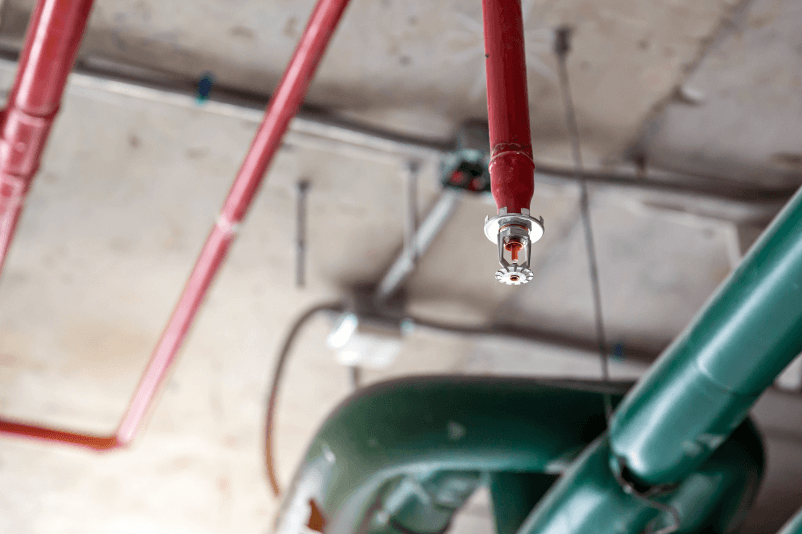
The main types of fire sprinkler heads used in commercial buildings are pendent, upright, sidewall, concealed, recessed, and specialty sprinklers such as ESFR and dry-type models. The right choice depends on the space. An Atlanta office with drop ceilings may use pendent or concealed sprinklers, while a warehouse with tall rack storage may need sprinklers designed for more demanding storage hazards. Restaurants can require several approaches because dining rooms, kitchens, storage areas, and walk-in freezers all present different conditions.
A sprinkler head may look like a small piece of hardware, but its position, response characteristics, temperature rating, and spray pattern all matter. The sprinkler has to fit the way the building is constructed and used. For a broader look at the system behind the sprinkler head itself, it helps to understand how a fire sprinkler system works and how water is delivered when a sprinkler activates.
Commercial properties around Atlanta can vary widely, from finished office suites and restaurants to distribution centers and industrial buildings. Their sprinkler systems often look different because the hazards and layouts are different.
Here are several sprinkler configurations commonly found in commercial properties.
Pendent sprinklers hang down from overhead piping. When activated, water hits the deflector and spreads downward and outward across the protected area.
They are common in commercial interiors with finished ceilings, especially spaces where most of the sprinkler piping is hidden above ceiling tiles or drywall. You may see pendent sprinklers in:
Pendent sprinklers are easy to recognize because the sprinkler body points downward from the ceiling.
Upright sprinklers sit on top of sprinkler piping rather than hanging beneath it. Water travels upward into the deflector and is redirected across the protected area.
They are often used in buildings where piping is exposed. Warehouses, mechanical rooms, manufacturing areas, and other unfinished commercial spaces are common examples.
In these settings, there may be no reason to hide the sprinkler piping behind a ceiling. An upright design can fit naturally with an open structural layout.
Sidewall sprinklers extend horizontally from a wall and direct water outward into the room.
They may be used where overhead piping is difficult to install or where the room layout makes a wall-mounted sprinkler appropriate. Certain offices, hallways, hotel rooms, and smaller commercial spaces may use sidewall models.
The sprinkler still has to be listed for the application and installed in a location where it can provide the required coverage.
Some commercial spaces put more emphasis on appearance. Restaurants, conference spaces, hotels, reception areas, and modern offices may use concealed or recessed sprinklers to reduce how much sprinkler hardware is visible.
A concealed sprinkler sits behind a cover plate designed to release when exposed to a specific temperature. A recessed sprinkler sits partly within the ceiling while remaining visible.
These designs can create a cleaner finished ceiling without removing required fire protection.
Atlanta offices can range from older commercial buildings to renovated suites and new mixed-use developments. Inside those spaces, the sprinkler system has to work with the actual floor plan.
Pendent sprinklers are common in offices with suspended ceilings. Concealed models may be used in areas where a cleaner appearance matters, such as reception spaces or conference rooms. Sidewall sprinklers may make sense in certain smaller rooms or corridors.
The bigger concern often comes after the office has been renovated.
Adding full-height walls, changing the ceiling, creating private offices, or converting a storage room into an occupied workspace can all affect sprinkler coverage. A sprinkler that once covered an open room may no longer distribute water properly after the layout changes.
Major renovations are a good time to have the existing fire sprinkler system evaluated so the new layout does not interfere with the original design.
Some commercial spaces use quick-response sprinklers. The term refers to how quickly the sprinkler's thermal element responds to heat under specific conditions.
It does not simply mean the sprinkler sprays harder or sends out more water.
The correct response type depends on the occupancy and system design. Existing sprinklers should not be replaced with quick-response models just because the name sounds preferable.
A warehouse creates challenges that a typical office does not. Tall racks can block water. Packaging can contribute to fire growth. The type of products being stored can also affect how a sprinkler system needs to perform.
That makes storage details important.
When a warehouse sprinkler system is designed or evaluated, several factors may come into play:
This is especially relevant around Metro Atlanta, where warehouses and distribution facilities are common along major transportation routes. The fire protection plan has to account for what is being stored and how it is arranged, not simply the fact that the building is a warehouse. An Atlanta warehouse fire safety checklist can also help facility managers review storage, exits, extinguishers, sprinkler clearances, and other routine concerns.
ESFR stands for Early Suppression Fast Response. These sprinklers are used for certain storage applications and are designed to Deliver substantial amounts of water to suppress a developing fire.
They are often associated with high-piled storage and warehouse operations, but they are not a universal solution.
Factors such as ceiling height, commodity classification, rack arrangement, storage height, water supply, and the sprinkler's listing all matter. Some warehouse storage arrangements also include sprinklers installed inside the racks.
These in-rack sprinklers can help get water closer to a developing fire where shelves, products, or packaging may interfere with water coming from the ceiling.
Whether they are needed depends on the storage configuration and the overall system design. That is one reason warehouse operators should be careful when increasing rack heights or changing the types of materials stored in a building.
Warehouses with more complex hazards may also need broader industrial fire protection measures in addition to sprinkler coverage.
Restaurants combine several very different spaces under one roof. The dining room may resemble another finished commercial interior, while the kitchen, storage rooms, utility spaces, and freezers create very different conditions.
Pendent or concealed sprinklers may be used in dining rooms, depending on the building design. Back-of-house spaces may call for other configurations.
The commercial kitchen adds another layer of protection.
Building sprinklers and kitchen fire suppression systems do not serve the same purpose. Sprinklers protect areas of the building, while a kitchen suppression system is designed to address fires involving cooking equipment and related hazards.
That distinction matters in restaurants because a range, fryer, hood, and duct system can present hazards that ordinary ceiling sprinklers are not intended to handle on their own. Restaurant operators who want a broader look at the most common trouble spots can also review these top restaurant fire hazards in Atlanta.
Water-filled piping and freezing temperatures do not mix well.
A walk-in freezer or another space exposed to temperatures below freezing cannot always be protected the same way as a heated dining room.
Dry-type sprinklers may be used in certain cold areas. Their construction helps keep water from sitting in the portion of the sprinkler assembly exposed to freezing conditions.
The correct setup depends on the building and the sprinkler system. For a closer look at the differences between the two broader system types, see wet vs. dry sprinkler systems.
One common misconception is that activating one sprinkler causes every sprinkler in a building to discharge water. In most conventional commercial sprinkler systems, individual sprinklers respond to heat.
Many use a glass bulb containing a heat-sensitive liquid. Others use a fusible element. Once enough heat reaches the sprinkler and its rated activation temperature is met, the heat-sensitive component releases and water can flow.
This allows water to be directed close to the developing fire rather than automatically flowing from every sprinkler throughout the property. The exact conditions that trigger operation are explained further in this guide to what causes a fire sprinkler to activate.
Sprinklers also come with different temperature ratings. That matters because the normal temperature near commercial equipment can be different from the temperature in an air-conditioned office.
The sprinkler has to be suitable for the environment where it is installed.
Commercial sprinklers may sit untouched for years, but that does not mean they should be ignored.
A sprinkler should be looked at more closely if you notice:
Routine fire sprinkler inspections help identify conditions that could interfere with sprinkler performance.
Never paint a sprinkler to match a ceiling or hang signs, decorations, cords, or other items from it. Even a small change can interfere with how the sprinkler functions. Cleaning also needs some care, since the wrong method can damage sensitive components. These tips for cleaning fire sprinkler heads explain why rough handling or harsh cleaning methods should be avoided.
If a sprinkler is damaged or badly corroded, replacement should not be treated like a simple plumbing repair. The replacement has to match the system requirements, including factors such as orientation, temperature rating, response type, and listing.
A complete commercial fire protection plan usually involves more than sprinklers alone.
Buildings may also rely on fire alarm systems to alert occupants, fire extinguishers for accessible first-response equipment, and emergency lighting to help people move through the building if normal power is lost.
Each part serves a different purpose. For example, a sprinkler system may control or suppress a developing fire, while the alarm system warns building occupants and emergency lighting helps keep exit paths visible. Businesses reviewing their extinguishers should also know how many fire extinguishers they need because placement and quantity depend on the building and its hazards.
Thinking about these systems together is especially useful during renovations, tenant buildouts, restaurant remodels, or warehouse changes.
One of the easiest sprinkler issues to overlook has nothing to do with damaged equipment. It happens when the building changes. An Atlanta restaurant may expand its kitchen. An office tenant may divide an open floor plan into smaller rooms. A warehouse may install taller racks or begin storing different products.
Each change can affect the conditions the original system was designed around.
That is why renovations and operational changes should include a review of existing fire protection equipment. Atlanta property managers preparing for compliance visits may also benefit from knowing how to prepare for a fire marshal inspection, especially after a major buildout or change in occupancy.
Property owners should consider these issues before work is complete rather than discovering later that a wall, rack, ceiling feature, or piece of equipment interferes with sprinkler coverage.
The sprinkler hanging from an office ceiling may look simple, but its placement and specifications are part of a much larger fire protection system. The same is true for upright sprinklers above warehouse racks, concealed sprinklers in restaurant dining rooms, and specialty sprinklers used in cold or high-storage areas.
For commercial properties in Atlanta and the surrounding area, Cliff's Fire can inspect, maintain, repair, modify, and service commercial sprinkler systems. Contact Cliff's Fire to schedule service or have an existing system evaluated after a renovation, layout change, or change in building use.


 ADDRESS


 Lume Sales & Marketing