CALL US TODAY
770-591-5271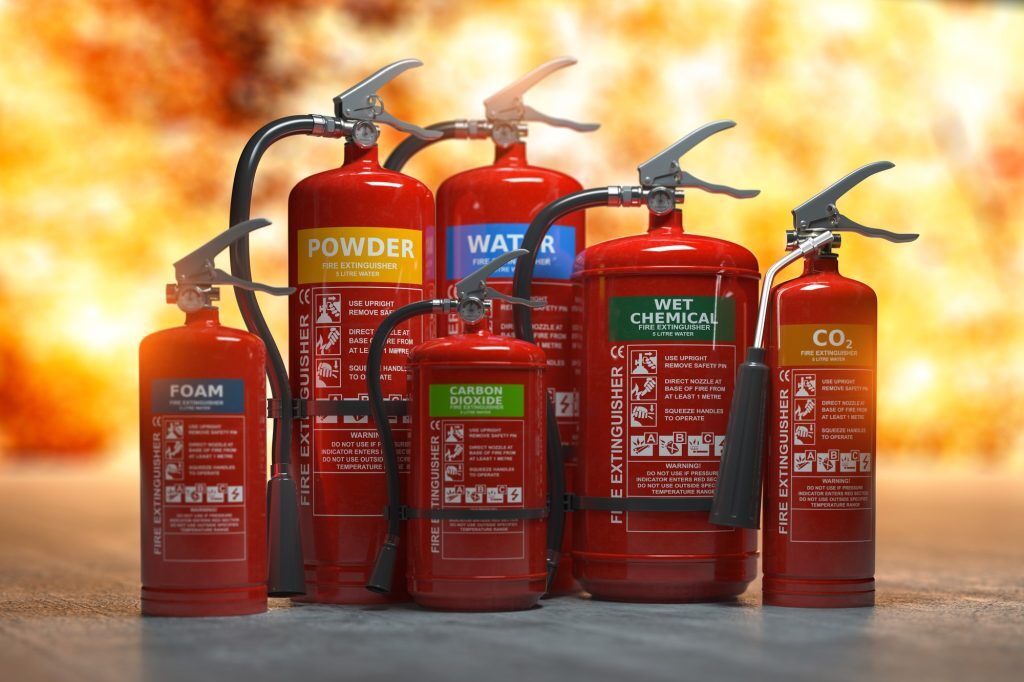
Fire extinguishers are a requirement by law to be present in buildings as safety tools. Knowing the symbols on a fire extinguisher can help quickly identify which cylinder to use during an emergency. In a fire situation, every second counts to minimize personal injury and avoid damage or property loss. Knowing which extinguisher is best to use is vital.
Apart from class designations, fire extinguishers may also bear symbols or pictograms that specify the types of fires they can combat. These symbols enhance their user-friendliness and accessibility, helping to prevent a minor incident from becoming a catastrophic fire.
Identifying fire extinguishers by classes and symbols helps dictate the type of fire they are suitable to fight against. These classifications are crucial for stopping fires and preventing further safety hazards.
Fire extinguishers have symbols that indicate which types of fires they can put out. These symbols fall into five unique classes: A, B, C, D, and K. Below, we explain each class, including colors, symbols, and fire type they combat.
Class A: Ordinary Combustibles
Class B: Flammable Liquids
Class C: Electrical Equipment
Class D: Metal Fires
Class K: Cooking Oils and Fats

Colors often help identify the type of fire extinguisher:
By understanding these symbols and colors, you can quickly identify the correct fire extinguisher to use in an emergency.
Each fire extinguisher label will have pictograms indicating the fire class they are best to use against based on the classifications above.
In addition to guiding users during a fire emergency, a list of appropriate and inappropriate instructions is presented on the label. Understanding and recognizing these symbols can be life-saving in emergencies.
This section describes how to match the right type of fire extinguisher to varieties of fire.
Fire extinguishers come labeled with distinct classes to denote their suitability for extinguishing different types of fires. Identifying the class of a fire is crucial when selecting an appropriate extinguisher.
The right fire extinguisher must correspond to the class of fire to ensure effective and safe fire suppression.
Certain fire types require specialized extinguishers:
Knowing the classes of fire extinguishers is not enough. It's also important to understand how to handle a fire extinguisher safely and efficiently when identifying a fire.
To operate a fire extinguisher correctly, follow the PASS technique:
Fire extinguishers play a critical role in safety, and proper knowledge of their usage is essential for effective firefighting efforts.
There are five extinguisher classes based on what type it is intended for – letters A, B, C, D, and K. A for easily combustible things, B is for highly flammable liquids, C is intended for electrical fires, D for metals that cause fire, and lastly K is for kitchen fire associated with cooking oils and fats.
Symbols on a fire extinguisher visually convey the types of fires they are safe to fight. These pictograms are easily recognized and quickly inform the user of the extinguisher's compatibility with that type of fire.
The number preceding the letter rating on an extinguisher provides a measure of its effectiveness against specific types of fires. For example, a higher number before 'A' or 'B' suggests a greater capacity to combat fires of those categories.
Illustrations are more easily understood, and having a visual representation is a helpful aid during emergencies as it creates the quickest solution possible.
The label on an extinguisher displays the classes of fires it is effective against, the suitability and capacity for extinguishing those classes, and operational guidelines. This information helps users make quick decisions during emergencies.
Identifying the right code allows a person to select the appropriate extinguisher for individual fires. It also ensures effective use and combat of fire. An individual must be well-equipped with knowledge to prepare for incidents involving fires.


 ADDRESS


 Lume Sales & Marketing